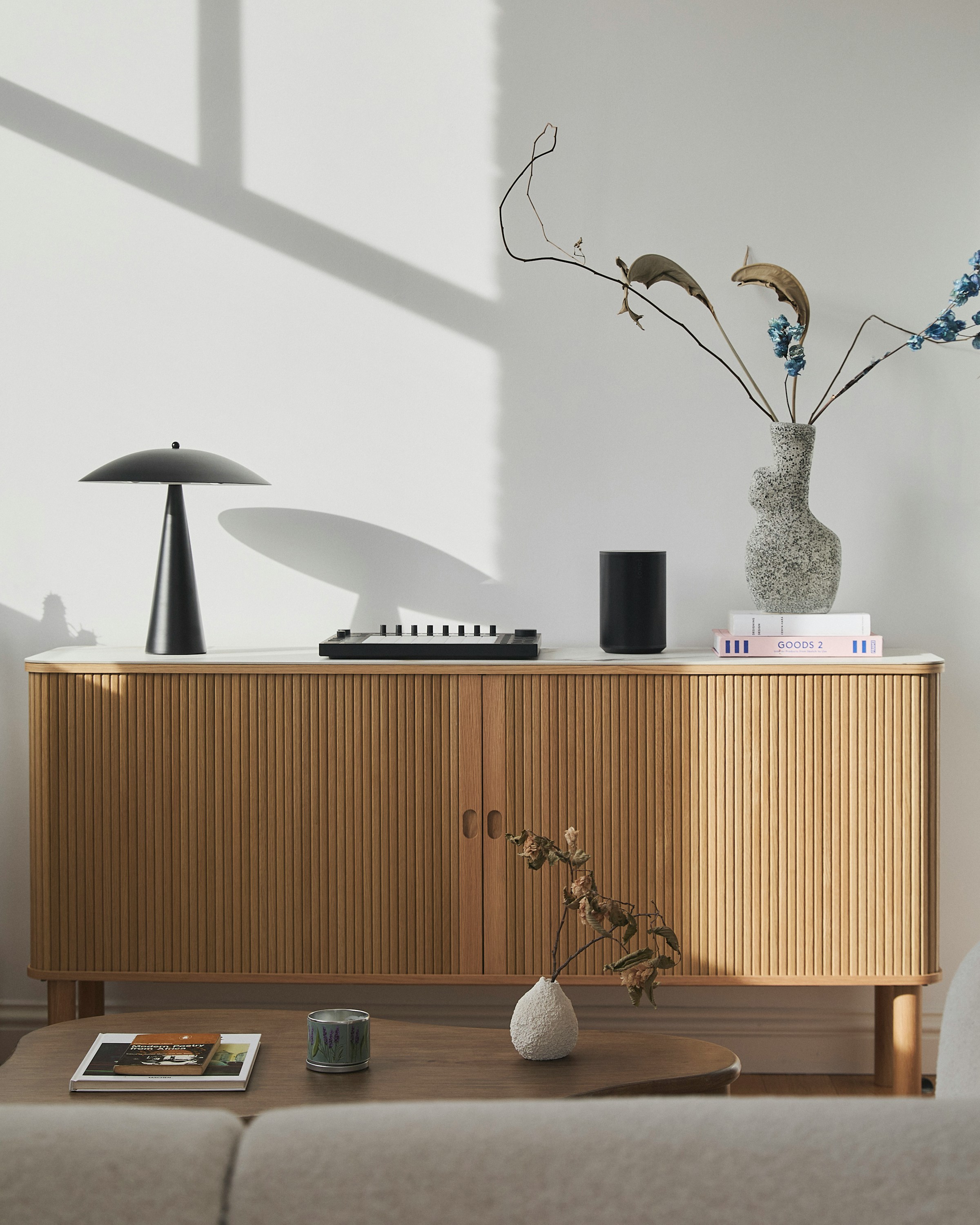
Rooms where every wood matches look like a showroom. Rooms where woods are mixed with no plan look like a garage sale. The difference is a few simple decisions made before the second piece arrives.
Find the undertone
Every wood leans warm (red, orange, yellow), cool (grey, ashy), or neutral. Cherry and mahogany are warm; walnut is warm-neutral; white oak is neutral to slightly warm; ash and driftwood finishes are cool. Woods with the same undertone mix easily regardless of how light or dark they are. Woods with clashing undertones, an orange-toned oak next to a grey-washed pine, fight even when their values are similar. Pick an undertone family and stay mostly inside it.
Choose a dominant wood
Usually the floor, or the largest piece if the floor is carpet or tile. Everything else is secondary to it. Two or three woods in a room is comfortable; more than that needs deliberate repetition to hold together.
Repeat each wood at least twice
A single walnut chair in a room of oak looks like a mistake. The same chair with a walnut picture frame or a walnut bowl on the shelf looks intentional. Small repeats count: a tray, a lamp base, a frame.
Contrast on purpose
When two woods sit side by side, make the difference obvious. A medium oak table with medium-dark walnut chairs reads as an almost-match and looks off. The same table with clearly dark chairs, or clearly light ones, reads as a choice.
Use buffers
A rug between a wood floor and a wood table, or a fabric seat between a wood frame and a wood floor, gives the eye a rest and lets more woods coexist. Upholstered dining chairs are the easiest way to put a new wood table on an existing wood floor.
Painted and metal pieces help
A black metal lamp, a white painted cabinet, a stone top: each one reduces the number of woods competing and gives the mix room to breathe. If a room has too many woods, the fix is often not another wood at all.