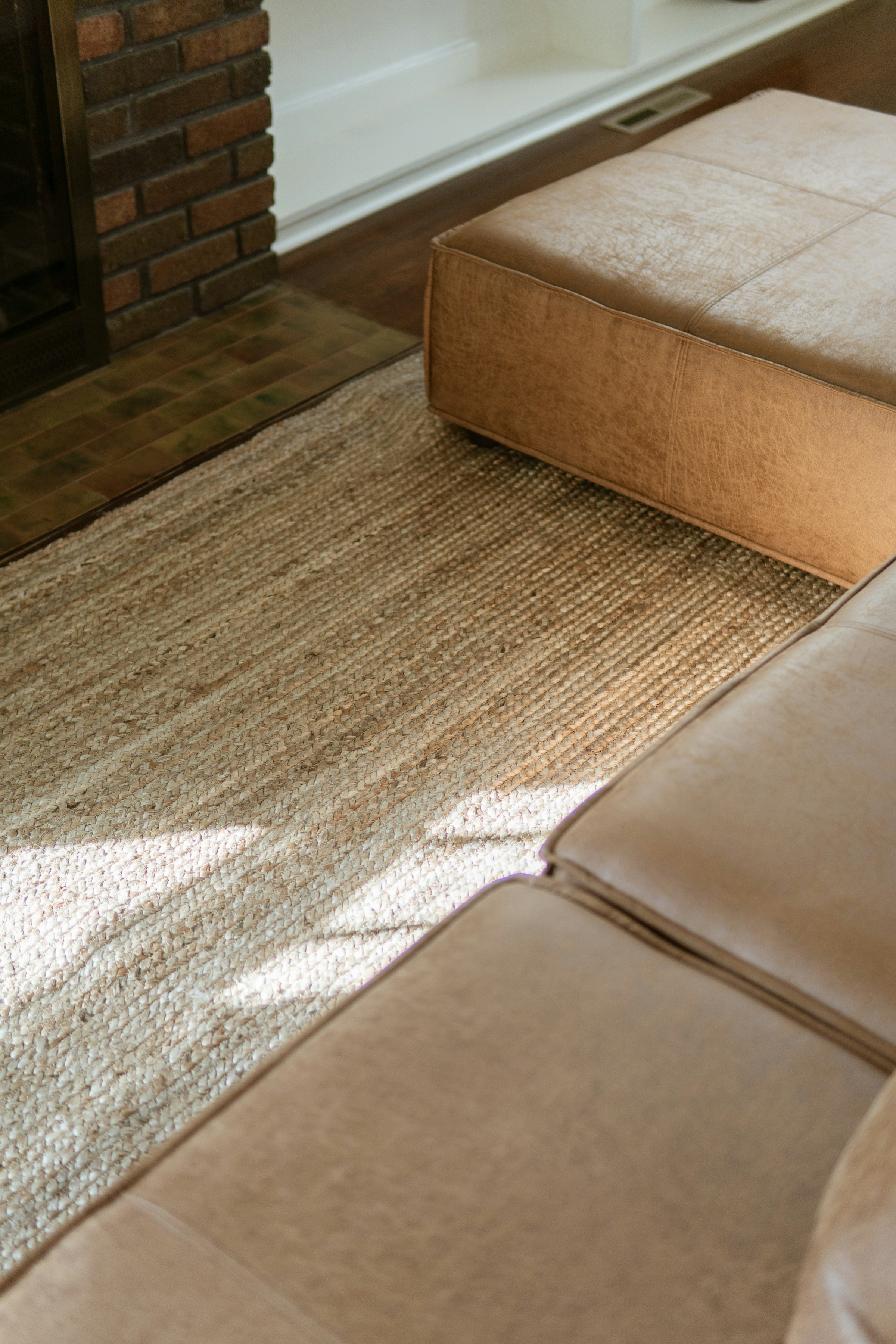
The most common rug mistake is a 5-by-8 floating in the middle of a room designed for an 8-by-10 or 9-by-12. A too-small rug makes the seating look like it is drifting; the right size ties the group together and makes the room feel bigger, not smaller.
The rule
All the front legs of the seating should sit on the rug, with the rug extending 6 to 8 inches past the sides of the sofa. If the room allows, all four legs of every piece on the rug is the most finished look. A rug that stops short of the sofa front, so nothing touches it, is the arrangement to avoid.
Working sizes
- A typical 84- to 90-inch sofa with two chairs: 8 by 10 feet is the usual answer.
- A sectional or a larger seating group: 9 by 12, sometimes 10 by 14.
- An apartment sofa with one chair: 6 by 9 can work if the front legs land on it.
- 5 by 8 is generally too small for a seating group; it belongs under a coffee table alone or in an entry.
Leave floor at the edges
Aim to leave 12 to 18 inches of bare floor between the rug and the walls. In a small room, 8 inches is acceptable. A rug that runs almost to the walls reads as carpet; a rug with a generous border reads as an intentional island.
Check it before buying
Use painter's tape to outline the candidate size on the floor, then step back and look from the doorway. This ten-minute test catches nearly every sizing error. It also shows you where the rug edge lands relative to doors, vents, and the path through the room.
Pile and material, briefly
For a living room with real traffic, a low to medium pile in wool or a wool blend is the durable, easy-to-clean choice and holds its look for years. High-pile and viscose rugs are lovely to look at and difficult to live with under a coffee table and feet. Whatever the material, a rug pad keeps it flat, protects the floor, and makes a thinner rug feel more substantial.