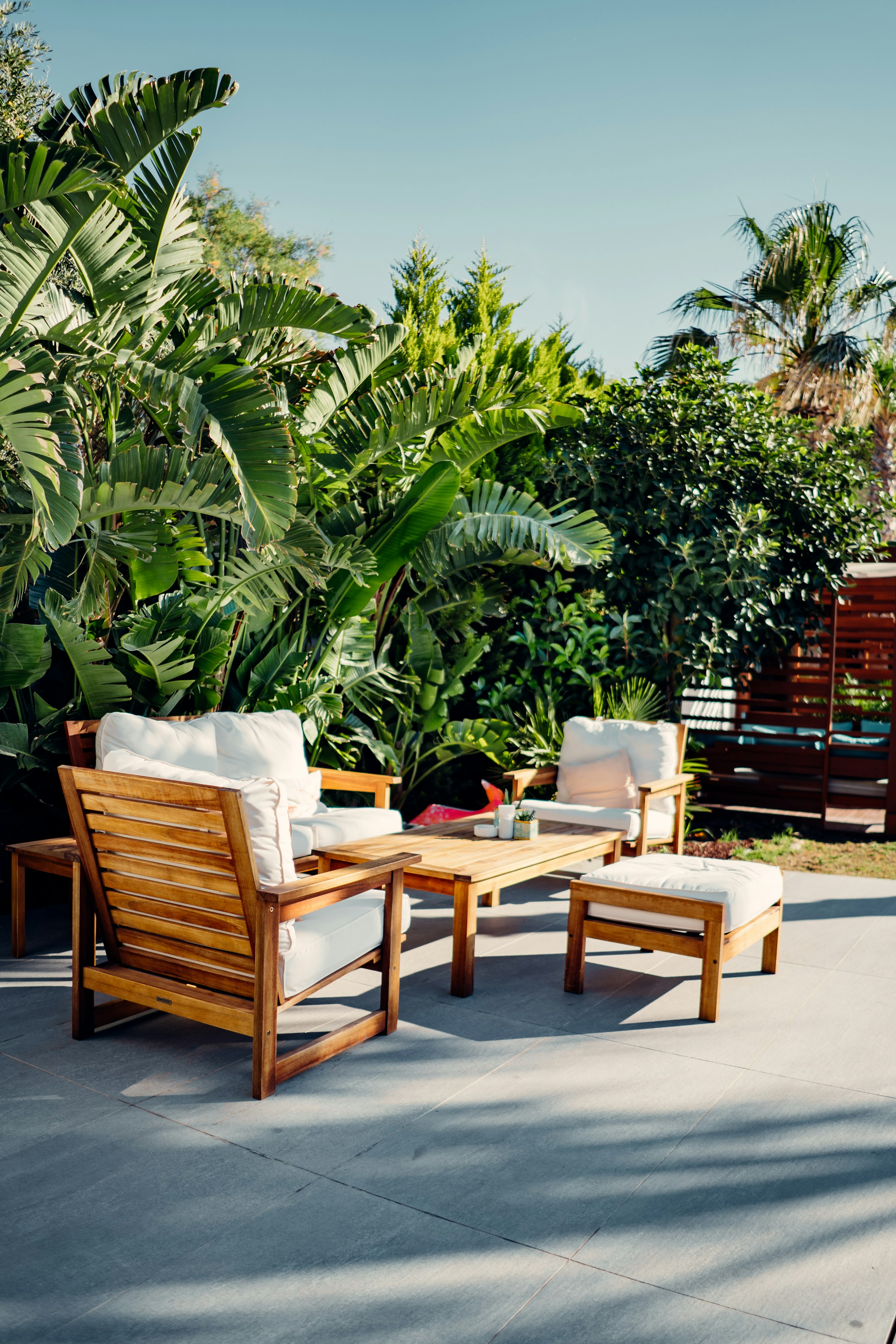
Outdoor furniture fails in predictable ways: frames rust or rot, cushions hold water and mildew, finishes chalk in the sun. Choosing well is mostly a matter of matching materials to your climate and to how much maintenance you will honestly do.
Frames
Teak is the benchmark: dense, oily, and stable outdoors for decades. Left alone it weathers to silver-grey; oiled once or twice a year it stays honey-toned. Expect to pay for it. Powder-coated aluminum is the practical modern choice: it does not rust, is light enough to move, and needs almost nothing. Look for a thick powder coat and welded rather than bolted joints. Steel is heavier and stronger but will rust wherever the coating chips, which in a wet climate is a matter of time. Synthetic wicker over aluminum is durable if the weave is HDPE rather than PVC; cheap PVC wicker cracks after a couple of summers. Acacia and eucalyptus are budget hardwoods that look like teak new and need sealing every year to stay that way.
Cushions
The fabric matters less than the foam. Quick-dry reticulated foam lets water pass straight through and dries in hours; standard foam holds water for days and grows mildew from the inside. For the cover, solution-dyed acrylic (the Sunbrella family and similar) resists fading and mildew far better than polyester, which fades within a season in strong sun. Zippered, removable covers are worth insisting on.
Match the climate
In the wet Pacific Northwest, drainage and dry time matter most: aluminum or teak frames, quick-dry foam, covers or storage for the off-season. In hot, dry climates, fade resistance and heat come first: light colors, acrylic fabrics, and awareness that dark metal in full sun becomes untouchable. Coastal air corrodes steel quickly and pits untreated aluminum; marine-grade finishes are worth the premium there.
Scale and layout
Outdoor pieces are often deeper and lower than indoor equivalents, and small balconies punish that. Measure the space and keep a 30-inch path to the door. On a balcony, a bistro table with two folding chairs usually serves better than a lounge set that leaves no room to stand.
Honest maintenance
- Teak: oil yearly or accept grey. Aluminum: rinse. Steel: touch up chips immediately.
- Cushions: stand them on edge after rain; store or cover for winter.
- Covers help but trap moisture if the furniture goes under them wet.
The set that lasts is usually the one whose upkeep you will actually do, not the one with the longest warranty.